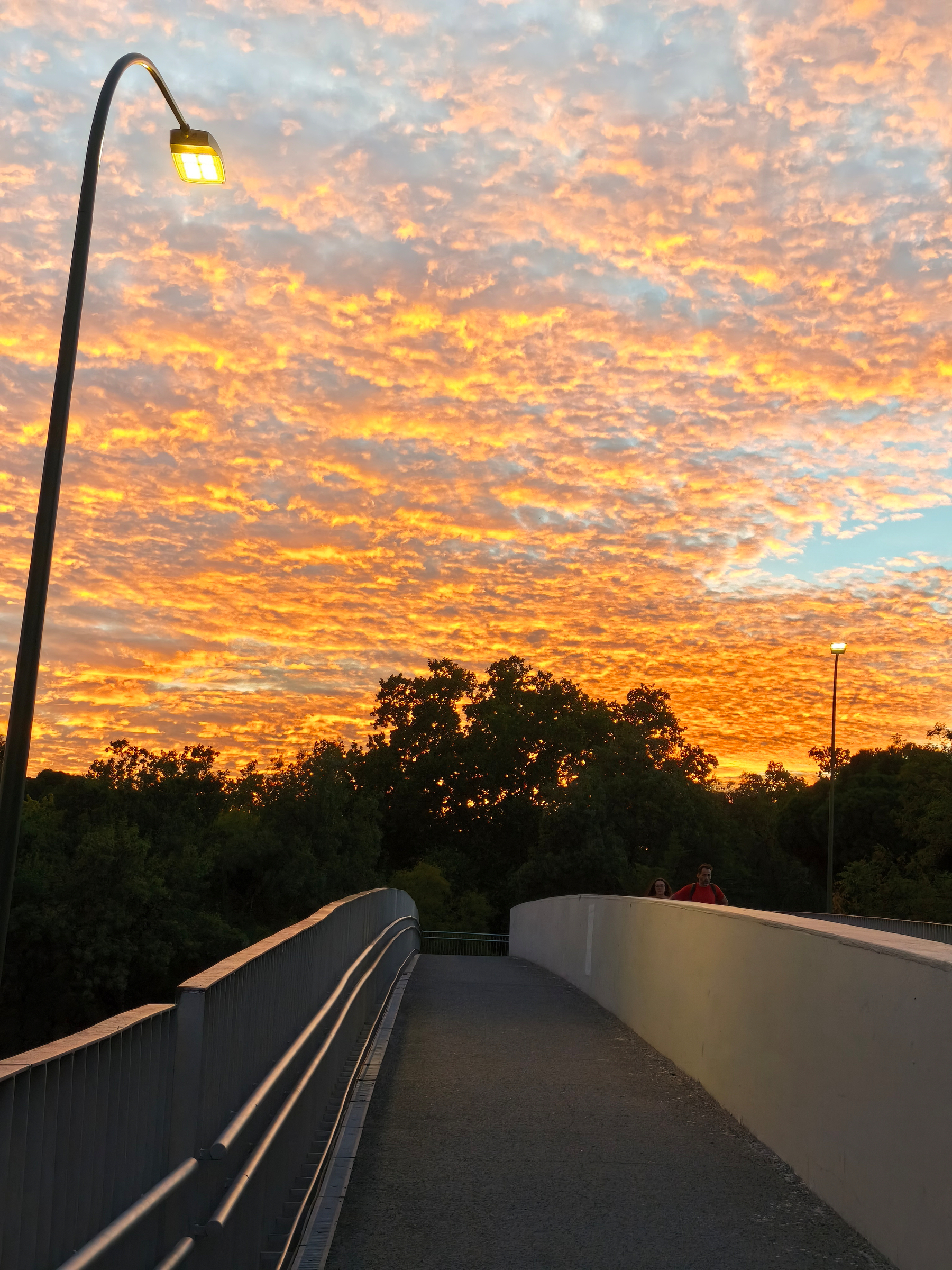
I'm Carlos Rodrigo: a husband to Mar, a father to Lucas and Nico, and a human-friend to Pancho.
Tepano woke before the sun, as he always did. The air inside his hare paenga was cool and smelled faintly of woodsmoke and the sweet potato his wife had wrapped in leaves the night before. He ate it cold, sitting at the threshold and watching the eastern sky bruise purple over the Pacific.
His tools waited by the door: three basalt picks of different weights, a coil of woven hau cord, a gourd of water, and the small obsidian flake he used for the fine work around the eyes. He gathered them without thinking. His hands had done this for twenty-six years.
The walk to Rano Raraku took most of an hour. Tepano liked it that way. The path wound up through grass still wet with dew, past the cousins’ plot where taro grew in neat rows, past the place where his grandfather was buried beneath a cairn of black stones. He greeted the grandfather as he passed. He greeted the wind. He greeted the two long-tailed tropicbirds wheeling above the crater rim, white against the brightening sky.
The quarry opened before him like a wound in the mountain. Half-finished moai lay everywhere — some on their backs staring at the sky, some still attached to the rock by a spine of tuff, some standing upright in pits, waiting to be moved. Forty-seven of them, by Tepano’s last count. His own was the third from the eastern wall.
He had been working on this one for nearly two years.
The ancestor inside the stone was a tall man, Tepano could tell. Long-faced, with a heavy brow and the slightly pursed mouth that ran in certain lineages. The clan elders had told him whose face it was when they assigned him the block — a chief from four generations back, a man who had brokered peace between two warring lineages and then died of an ordinary fever, unremarkably, in his sleep. Tepano had never met him. But he had been carving him long enough now that he sometimes dreamed about him.
He set down his gourd. He laid his hand flat against the stone, which was cool and slightly damp from the night. Good morning, he thought, but did not say aloud. There were proprieties.
Then he picked up the medium pick and began.
The work was rhythmic and slow. Tap, tap, tap-tap. A small puff of pale dust each time. The tuff of Rano Raraku was soft compared to true basalt — that was why they carved here, and nowhere else — but it still took a thousand patient strikes to remove what a careless man might think of as a single curl of stone. Tepano was working today on the left ear. The ear was nearly finished. It had taken him eleven days.
By midmorning the sun was high, and the other carvers had arrived. Old Hotu was there, teaching his nephew and spending more time talking than chipping. Manu worked silently and fast and was almost certainly the best carver of their generation, though he would never say so. There were the brothers from the coast, whose names Tepano always confused. They called out greetings to one another across the quarry, and the calls echoed strangely off the curved walls of the crater, layered with the constant soft tapping of stone on stone, a sound like very large, very gentle rain.
Tepano stopped at midday to drink. He sat in the shadow of his moai’s enormous head and looked out over the island. From here he could see the southern coast, the long grass running down to cliffs, the foam where the swells broke. A fishing canoe was a black splinter on the blue. He thought about his son, who was nine, and who wanted to be a carver too, and who was at this moment probably down at the shore being scolded by his mother for getting in the way of the net-menders.
He thought about how the ancestor he was carving had also probably had a son. Had probably also sat somewhere on a hot day and worried, mildly, about that son’s prospects. The thought pleased him. It made the work feel less like service to a dead stranger and more like a long, slow conversation between two ordinary fathers.
In the afternoon he switched to the small pick and worked on the curve where the ear met the jaw. This was delicate. A single misjudged strike could chip away too much, and there was no putting stone back. He worked with his whole face close to the surface, breathing carefully so as not to blow dust into his own eyes. His shoulders ached. His right hand had the familiar dull throb that lived there during carving season and faded only in the rainy months.
Manu wandered over at one point and stood looking. He didn’t say anything for a long while. Then he grunted and said, “The ear is good.” Then he walked away. Tepano felt this was high praise and tried not to grin.
When the light began to slant and turn gold, he stopped. He cleaned his tools with a scrap of barkcloth and laid them in their usual order. He drank the last of his water. He laid his hand on the stone again.
Tomorrow, he thought. Tomorrow we start the jaw.
The walk home was downhill, which his knees appreciated. He passed the grandfather’s cairn and greeted him again. The smoke from the village fires rose in thin grey columns and the smell of roasting fish reached him before the houses came into view. His son saw him first and ran the last hundred paces, shouting. His wife looked up from the cooking fire and smiled the small private smile she kept for him alone.
He ate. He told them about the ear. His son wanted to know how many more days until the moai was finished, and Tepano laughed and said he didn’t know, maybe a year, maybe two, and his son made a face of theatrical despair that made everyone laugh.
Later, lying on his mat in the dark, Tepano listened to the surf and thought about the chief in the stone. He still had the whole jaw to do. The neck. The torso, with its long hands folded across the belly. The tall, straight back that would face inland, watching over the village forever once the moai was raised on its ahu.
It was a great deal of work. He wasn’t sure he would finish before his hands gave out.
But that, he thought, drifting toward sleep, was not really the point. The point was the tapping. The point was the small white puffs of dust. The point was the slow uncovering of a face that had been waiting, patiently, inside the mountain, for someone to come and let it out.
He slept.
This is one of the AI stories, stories prompted by me, written by Claude and later narrated by Elevenlabs.
The supply boat came once a month, and Edgar Marsh had learned to be grateful for the silence in between.
He had not always felt this way. In the first year after he took the post at Heron Point — a granite tower perched on a finger of rock fourteen miles off the Maine coast — he had pressed his ear against his shortwave radio every evening like a man listening for a heartbeat. He had filled notebooks with letters he never sent. He had counted the days between boats the way a prisoner counts the marks on a wall.
That was six years ago. Something had shifted since then, though he could not tell you exactly when, the way you cannot tell you exactly when winter becomes spring. One morning you simply notice that the light has changed.
Edgar’s day had a shape, and he loved it the way a sculptor loves a good tool.
He rose before dawn. He climbed the 112 steps to the lamp room — he had stopped counting years ago, but the number lived in his legs — and he watched the beam sweep the dark water in its slow, patient arc. Four seconds on, four seconds off. The rhythm of it had become his heartbeat. He sometimes thought that if the light ever stopped, he would stop too.
After the lamp, he made coffee, strong enough to stand a spoon in, and he sat at the kitchen window with his logbook. Wind speed. Barometric pressure. Visibility. Sea state. He wrote these things down with the same care a poet gives to words, because out here the weather was not background — it was the whole story. A falling barometer was a drama. A bank of fog rolling in from the northeast was a character with intentions.
Then there was the rest of the morning: maintenance. There was always maintenance. The salt ate everything — the iron railing, the window seals, the skin on the backs of his hands. He caulked and scraped and painted. He oiled the gears of the rotating mechanism with a tenderness that would have embarrassed him in another life. He was keeping something alive. That felt like enough.
In the afternoons he read. His shelves ran floor to ceiling in the small sitting room, and he had read most of them twice. He had opinions now about Tolstoy that he had never had time to form when the world was loud. Somewhere in the middle of his third winter, he had decided that Anna Karenina was a book about the terror of being known, and that this had everything to do with why he had ended up on a rock in the Atlantic.
He had been a civil engineer in Portland. A good one. He had a wife named Ruth who was also good, and a small house with a porch he never sat on, and colleagues who met for beers on Fridays in a bar that was always too warm. None of it was unhappy, exactly. It was just that he had felt, for the better part of a decade, like a man standing in a crowded room shouting something important that no one could quite hear. The noise was too constant. The self got lost in it.
Ruth had understood before he did. You’ve been alone in a room full of people for years, she said, the autumn before he left. At least go be alone, honestly. They had parted without bitterness, which was its own kind of love.
What no one tells you about solitude — real solitude, the sustained and deliberate kind — is that it is not empty. This is the great misunderstanding. Edgar had expected silence to be a kind of deprivation, an absence of things. Instead, it turned out to be a presence. The world, it seemed, was extraordinarily loud when you finally stopped adding to the noise.
He heard the personality of wind now. A northeast gale had a different voice than a southwest blow — one was angry, blunt, indifferent; the other was mournful, almost apologetic, as if it were delivering bad news. He had learned to read the moods of the water the way he once read the faces of colleagues — the flat grey petulance of a calm before a storm, the cheerful sparkle of a clean autumn morning, the dark purposeful heave of open ocean swells that had travelled a thousand miles to reach him.
He had become, in short, a close reader of the world. Solitude had given him that. It had slowed him down until things had time to mean something.
On Thursday evenings he spoke to his sister Vera by radio. These conversations were the seams of his week. He told her about the whale he had spotted off the south shoal, a minke, young and curious, circling the rock twice as if taking measurements. He told her about the cormorant that had taken up residence on the railing of the lamp gallery, a bird of magnificent and unwarranted self-importance. He told her about the fog that had sat on him for eleven days in February, thick and absolute, so that the world contracted to thirty feet in every direction and he had felt, not afraid, but strangely held. Like being cupped in a hand.
Vera worried about him. He knew this and felt tenderness toward the worry, the way you feel tenderness toward someone who brings you an umbrella on a clear day. The care was real even if the fear was misplaced.
Don’t you get lonely? she asked him once.
He thought about it honestly before he answered. I get lonely the way you get hungry, he said. It comes, and then it passes, and in between there’s something else. Something that doesn’t have a word for it.
She was quiet for a moment. Does the light help?
The light is the whole point, he said.
What Edgar had come to understand, in the long patient work of living alone with himself, was this: meaning is not something that happens to you. It is something you make, carefully, out of attention. Out of showing up to the same place, the same task, the same window, the same sky, every day, until you have looked at it deeply enough to see what is actually there.
The lighthouse did not keep him from the world. It aimed him at it. Every night, the beam went out across the dark water, and somewhere a ship corrected its course, and the sailors on watch did not even know his name. He knew. That was sufficient.
He had found a particular freedom in being useful in a way that requires no audience.
On the last night of October, a nor’easter came in fast and fierce, the kind of storm that made itself known by what it took: first the stars, then the horizon, then the distinction between sea and sky, until the whole world was just wind and salt and the howl of something vast and indifferent. Edgar climbed his 112 steps and checked the lamp. Checked it again. The beam swept its four-second arc out into the chaos, steady and unchanged, the same as it had been on the calmest morning of July.
He sat with it for a while, his back against the lamp’s warm housing, listening to the storm press itself against the glass.
He was sixty-one years old. He was fourteen miles from the nearest person. He was, without any reservation or asterisk, exactly where he was supposed to be.
Outside, the dark water moved and heaved. Inside, the light turned. The beam went out, and out, and out — into the storm, into the dark, to anyone who needed it — and came back around again.
As it always had. As it would.
Edgar Marsh wrote the weather in his log, made one last cup of coffee, and went to bed entirely at peace.
This is one of the AI stories, stories prompted by me, written by Claude and later narrated by Elevenlabs.
Watched: La bola negra 🍿 Very powerful, though not as powerful as the trailer.
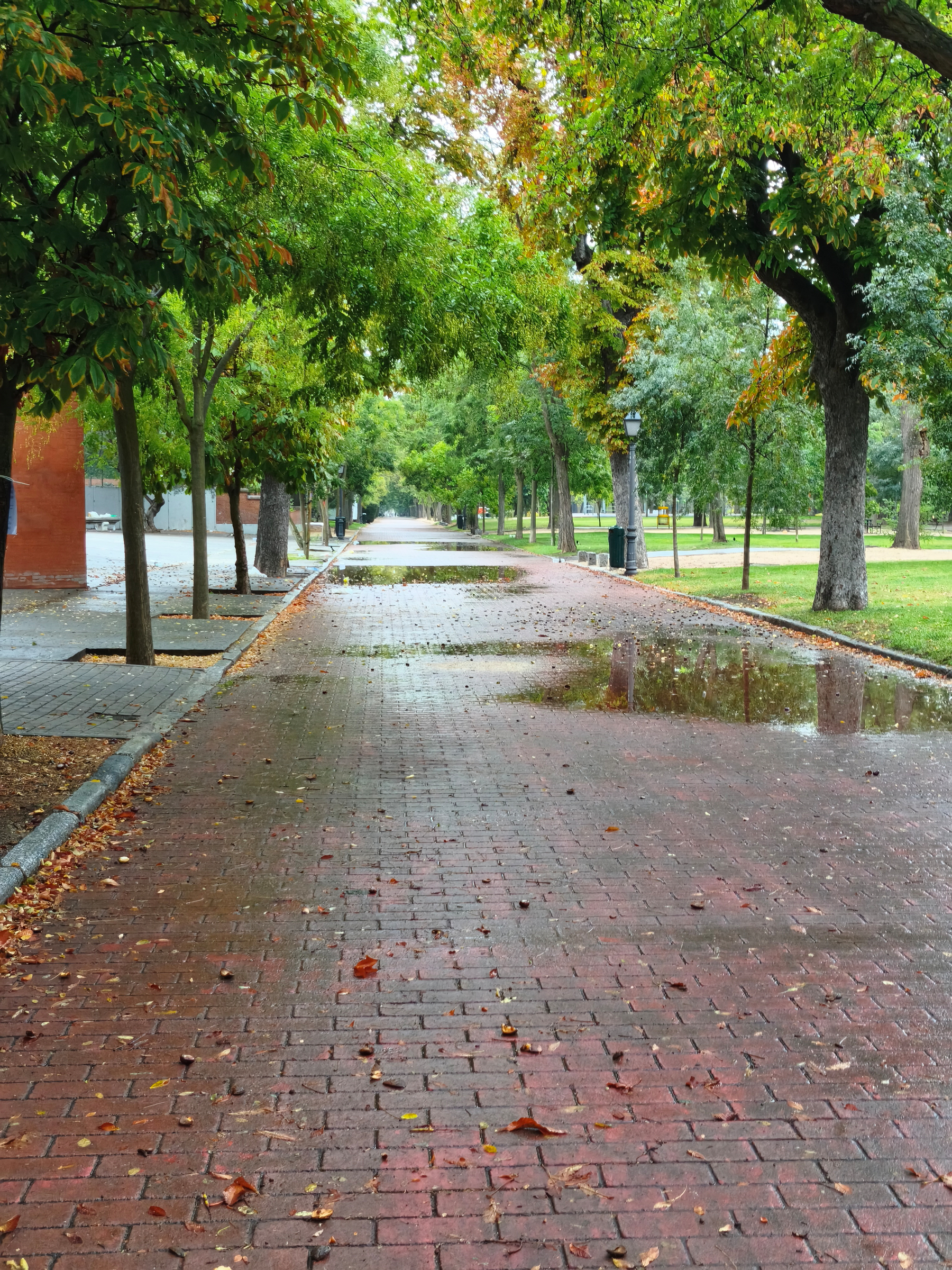
The park for Pancho and I.
The individual has always had to struggle to keep from being overwhelmed by the tribe. To be your own man is a hard business. If you try, you’ll often be lonely, and sometimes frightened. But no price is too high to pay for the privilege of owning yourself.
― Rudyard Kipling, Beware the tribe
So that I think is a real that’s a real thing for for privacy and security and trust. And if you’re going to have an agent that knows a lot about you, which I would guess pretty much we all are going to have that. I mean, I think you fast forward 5 years, like everyone is going to have an agent that like really intimately understands your goals and everything around you and can help you get stuff done. ― Mark Zuckerberg
Is this the future of UI/AI? Are we going to have our own “Daemon” as in The Golden Compass?
So, definitely not living in a simulation?
“Drawing on mathematical theorems related to incompleteness and indefinability, we demonstrate that a fully consistent and complete description of reality cannot be achieved through computation alone,” Dr. Faizal explains. “It requires non-algorithmic understanding, which by definition is beyond algorithmic computation and therefore cannot be simulated. Hence, this universe cannot be a simulation.”
Co-author Dr. Lawrence M. Krauss says this research has profound implications. “The fundamental laws of physics cannot be contained within space and time, because they generate them. It has long been hoped, however, that a truly fundamental theory of everything could eventually describe all physical phenomena through computations grounded in these laws. Yet we have demonstrated that this is not possible. A complete and consistent description of reality requires something deeper—a form of understanding known as non-algorithmic understanding.”
The team’s conclusion is clear and marks an important scientific achievement, says Dr. Faizal. “Any simulation is inherently algorithmic—it must follow programmed rules,” he says. “But since the fundamental level of reality is based on non-algorithmic understanding, the universe cannot be, and could never be, a simulation.”
To read more and learn more, I set a challenge for myself: a list of the most relevant books, as recommended by Claude. I have a head start since I have read some of them.
If you have any recommendations, please get in touch.
We should be confident in our beliefs, but never certain… (source)
It is not the man who has too little who is poor, but the man who is always after more.
— Seneca
Most people are other people. Their thoughts are someone else’s opinions, their lives a mimicry, their passions a quotation.
— Oscar Wilde
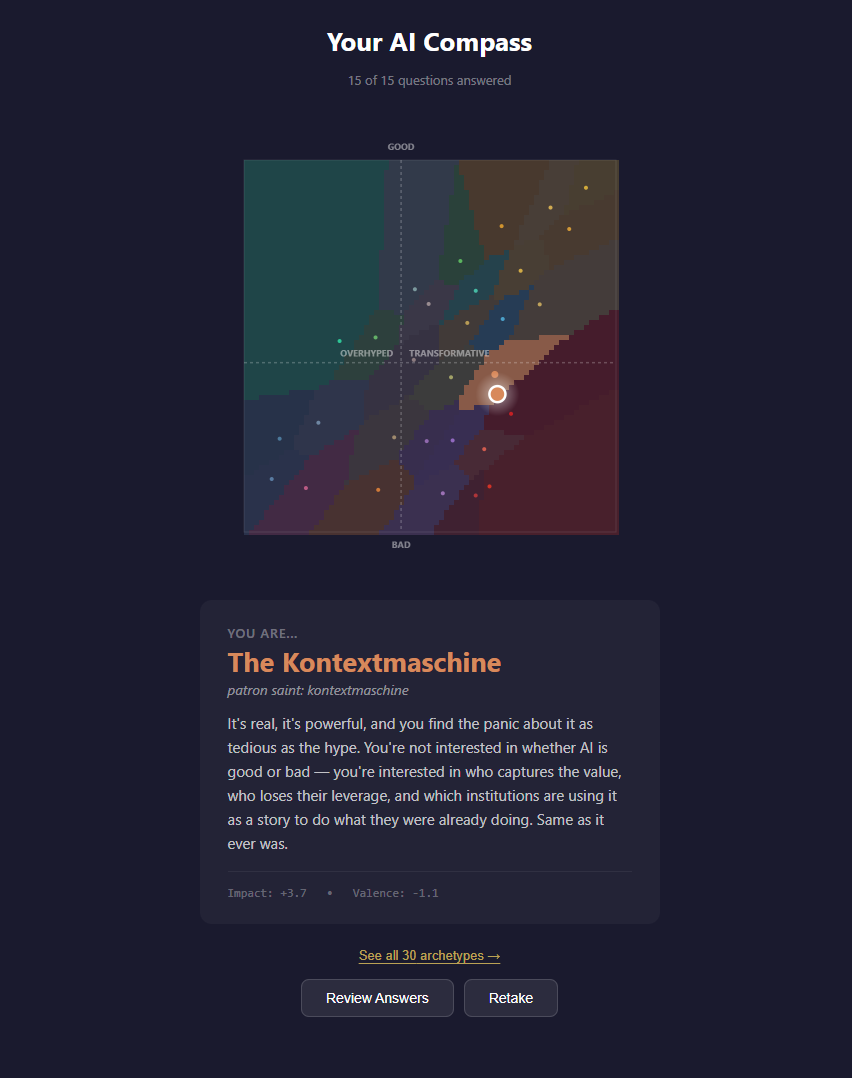
After a short list of questions, this appears to be my archetype regarding AI. Check yours.
If you cannot prove that every dollar of electricity you burn is generating a verified unit of intelligence, you are functionally bankrupt.
— Peter Diamandis
Nothing makes us safer and happier than ensuring the well-being of everyone.
— From Jens Oliver Meiert
Anything else I should try?
For thousands of years Greenland sharks have swum in silence, as above them the world has burned, rebuilt, burned again. […] I am glad not to be a Greenland shark; I don’t have enough thoughts to fill five hundred years. But I find the very idea of them hopeful. They will see us pass through our current spinning apocalypse, and the crash that will come after it, and they will see the currently unimagined things that will come after that: the transformations, revelations, the possible liberations. That is their beauty, and it’s breathtaking: they go on. These slow, odorous, half-blind creatures are perhaps the closest thing to eternal this planet has to offer.
— Katherine Rundell in Consider the Greenland Shark